
Parachute: Get Paid for Plasma
Buoy Software, LLCMedical
4.4725.00 Reviews
- Version
- 120260921
- Installs
- 100.00K
- Age Rating
- Mature 17+
Screenshots
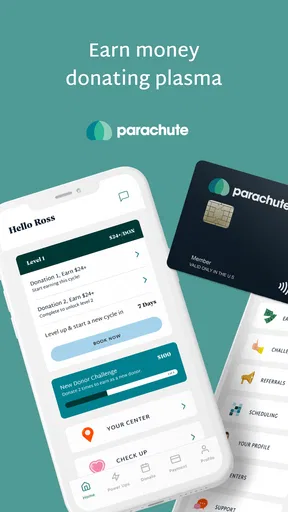

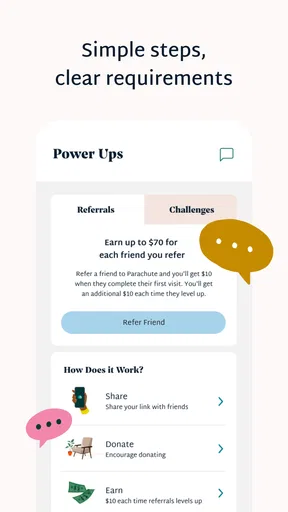
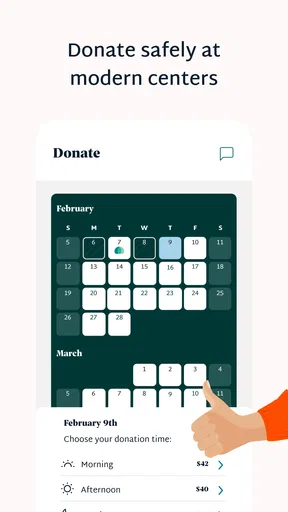
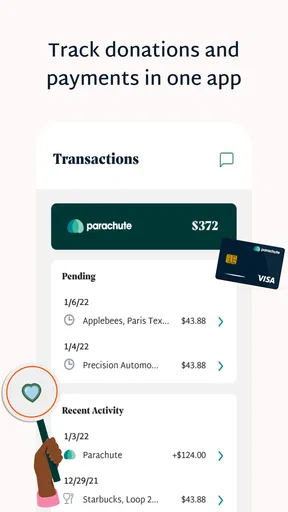
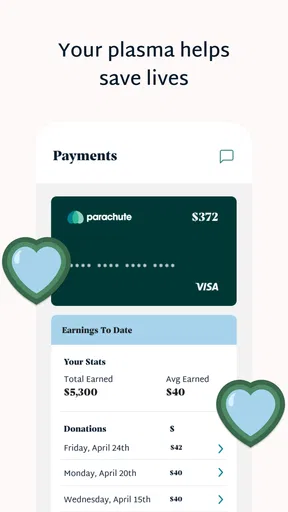
Our Review of Parachute: Get Paid for Plasma
 Analysis by Appyee
Finding a plasma donation center is usually less about discovering that donation exists and more about making the process fit into an already busy day. Parachute: Get Paid for Plasma approaches that problem from a practical angle: it is a medical-category app from Buoy Software, LLC that helps people look for verified centers and understand the earning opportunity connected with donating plasma. I found its purpose easy to grasp, especially if you are comparing nearby options rather than trying to manage every part of donation from one screen.
The first thing I would clarify is that Parachute is not a replacement for medical advice, a diagnostic service, or a guarantee that every user will qualify to donate. It is better viewed as a discovery and decision-support tool around plasma donation. That distinction matters because eligibility, center procedures, payment rules, and appointment availability can affect the real experience. The app can make the search more approachable, but the donation center remains the place where health screening and final decisions happen.
How Parachute feels when you use it
I look at Parachute as a first-stop planning tool, not as a substitute for checking a center’s instructions or deciding whether donation suits me. In this section, I’ll focus on the small choices that make a search more useful: setting a realistic travel limit, comparing options before getting attached to an offer, and confirming the details that matter before leaving home.
A quick start for people comparing donation options
My first impression is that the app’s value depends on how quickly it gets me from curiosity to a realistic next step. Someone may have seen an offer to earn money from plasma donation, but still wonder where to go, whether a center is legitimate, and how much effort the process involves. Parachute puts the verified-center idea near the heart of the experience, which is more useful than a broad web search filled with unrelated results.
The app is free, so there is no payment barrier before exploring it. That makes sense for a tool intended to help people decide whether donating is practical. I would still treat any earning figure as an opportunity described by the service rather than money that everyone automatically receives. The store summary mentions earning up to 200 dollars across three visits, but the word “up to” is important: actual results can depend on the center, eligibility, promotions, and the user’s ability to complete the required visits.
Speed expectations should be realistic. A lightweight search or browsing task ought to feel quicker than arranging a donation itself, but the app cannot remove the time needed for screening, travel, waiting, and the donation procedure. In everyday use, I would open it before leaving home, compare the available center information, and then confirm the practical details directly with the chosen location. That workflow prevents a common mistake: assuming that finding a center in an app means an immediate appointment or guaranteed payment.
What makes the workflow useful
A less obvious strength is that Parachute can help separate two decisions that people often mix together. The first is whether plasma donation fits their circumstances at all. The second is which verified center is worth contacting. Keeping those questions separate makes the process less impulsive. I can consider travel distance, time commitment, and personal comfort before focusing on the financial incentive.
I also like the idea of using the app as a preparation checkpoint rather than staring at it repeatedly throughout the day. Before opening it, I would note my preferred travel radius, the times I could realistically donate, and any questions I need answered by a center. That turns the app into a short planning session instead of an endless search. It is a small habit, but it reduces the chance of choosing a location only because its offer sounds attractive.
For a realistic scenario, imagine someone whose work schedule changes from week to week and who wants an additional source of income. They could use Parachute to identify verified centers near home or work, shortlist the locations that do not create an unreasonable commute, and then contact the most suitable center to clarify the next step. If the only convenient center requires a long trip or awkward timing, the app has still done something valuable: it has exposed the practical trade-off before the user spends time traveling.
Where the app may feel slower than expected
The perceived speed of Parachute should not be confused with the speed of earning money. Even a smooth app session cannot make plasma donation instant. New donors may need to review requirements, answer questions, complete screening, and wait at the center. Returning donors may still face changing availability or center-specific procedures. I would therefore judge the app on how efficiently it helps me reach a sensible decision, not on whether it turns donation into a few-minute task.
There is also a natural pause between discovering a center and trusting it enough to visit. A verified listing is reassuring, but I would still confirm opening hours, current offers, identification requirements, and whether appointments are needed. This extra verification is not a failure of Parachute; it is the responsible final step when health and financial expectations are involved.
Handling heavier use and repeated searches
Heavy use for this app is more likely to mean repeated comparison than continuous activity. A person may check several centers, revisit the app after changing their schedule, or return while deciding whether the donation routine is sustainable. That kind of use should be manageable for most modern phones, but the real burden is not likely to be processing power. It is the mental load of comparing travel, time, screening, and payment expectations.
I would avoid treating Parachute as a background utility that must stay open all day. Its strongest use is deliberate: open it when planning, review the options, save the important details in my own notes if needed, and close it. This approach also helps conserve battery and avoids repeatedly checking information that may not change from minute to minute.
Repeated use can be worthwhile when a user is genuinely evaluating a donation routine rather than chasing a single promotional message. After the first visit, I would reassess whether the commute, waiting time, and physical experience fit my schedule. If the arrangement is inconvenient, opening the app more often will not solve the underlying problem. The app is useful for finding possibilities, but it cannot make an unsuitable routine suitable.
Another practical insight is to compare the full cost of participation instead of looking only at the headline earning opportunity. Travel, parking, missed work, meals, and recovery time can change the value of a visit. Parachute can help begin the search, but I would make the final calculation with a simple personal checklist. That is especially important for anyone considering regular donations rather than trying the process once.
Reliability, trust, and what still needs confirmation
Reliability has two layers here. The first is technical reliability: whether the app opens, responds, and lets me review its information without unnecessary friction. The second is practical reliability: whether the center details and earning expectations still match what I encounter when I contact or visit a location. For this type of app, the second layer matters more. A fast interface is not enough if a user treats old or incomplete information as a promise.
Parachute has a reasonably established presence, with more than 100 thousand installs and an average rating of 4.4 from around 1.3 thousand ratings. Those figures suggest that many people have found the app useful enough to try and evaluate, but they should not replace my own judgment. Ratings often combine different expectations: some users may care about finding a center, while others may expect detailed medical guidance or a complete donation-management system.
The app’s age rating is Mature 17+, which is appropriate for a service involving paid plasma donation and health-related decisions. I would not encourage a younger person to treat it as a casual money-making app. Adults should also read the information carefully and contact the center with questions that affect eligibility. The app can support preparation, but only qualified staff at the donation location can assess whether an individual may donate.
One of the most important reliability habits is checking information close to the planned visit. Offers and operating details can change, and a user should not rely solely on a previous search. I would take a screenshot or note the center name and contact information after narrowing the choice, then confirm the relevant details before traveling. This is particularly useful for anyone making a long trip or arranging time away from work.
Device compatibility and resource expectations
Parachute supports Android devices running version 7.0 or later, which covers a broad range of phones. That is helpful for users who do not own a recent flagship model and are considering the app for a straightforward search rather than demanding multimedia work. The current version is 120260727, so keeping the app updated is sensible when the operating system allows it.
I would expect the app to be modest in its demands because its purpose is centered on finding and reviewing donation information, not intensive graphics or gaming. Still, older devices can behave differently depending on available storage, background activity, and the health of the operating system. If the app feels sluggish, I would first close unused applications, check for system updates, and restart the phone before assuming the service itself is unreliable.
Users with limited data plans may prefer to perform their research over Wi-Fi, especially if they plan to browse repeatedly. I would not keep the app open while traveling unless necessary. A better workflow is to research the center beforehand, confirm the route with the phone’s usual navigation tool, and use Parachute again only when a new comparison is needed. This keeps the app’s role focused and avoids turning a simple planning task into unnecessary phone use.
There is also a privacy and comfort consideration that is easy to overlook with medical-related services. Before entering personal information, I would read the app’s current privacy details and understand why each requested item is needed. I would share only what is necessary for the next step. That is not a criticism unique to Parachute; it is a sensible rule whenever an app sits close to health, identity, and payment decisions.
Who will benefit most from it
Parachute is most appealing to an adult who is new to plasma donation, wants a more focused starting point than a general search engine, and lives or works within practical reach of a verified center. It may also help someone comparing several possible locations before committing to a first visit. The free price lowers the risk of exploring, and the app’s clear connection to paid plasma donation makes its purpose easy to understand.
It is less suitable for someone looking for a full personal health record, detailed clinical education, or a guaranteed income calculator. It is also a poor fit for anyone who cannot reasonably travel to a center, needs immediate cash with no time for screening, or is unwilling to confirm requirements directly. In those cases, a general medical professional, the donation center itself, or a different income option would be more appropriate.
Compared with searching the web, Parachute should feel more focused because it is built around verified plasma-donation centers rather than a wide collection of pages. Compared with contacting centers one by one, it may reduce the initial effort of discovering possible locations. The trade-off is that a specialized app can narrow the perspective: it helps with this particular donation pathway, but it does not replace broader research into health suitability, personal finances, or alternative ways to earn money.
My performance verdict after weighing convenience and limits
My overall view is that Parachute works best as a fast first step, not as the complete donation experience. Its strongest contribution is reducing uncertainty at the discovery stage: I can begin with verified centers, consider whether the opportunity fits my routine, and prepare better questions before making contact. That is meaningful convenience for a free app, particularly for a first-time donor who does not know where to begin.
The app’s limits are equally important. It cannot guarantee eligibility, eliminate the time involved in donating, or ensure that a promotional earning amount will apply to every person. The practical value depends heavily on having a reachable center and being willing to confirm current details. If those conditions are missing, the app may be informative but not especially useful.
From a device perspective, the Android requirement is approachable, and the app should suit ordinary planning sessions better than demanding continuous use. I would keep expectations moderate on older phones and use it intentionally rather than leaving it active. The most reliable routine is simple: compare locations, record the promising option, verify the details with the center, and then decide whether the full time and travel commitment make sense.
For me, the deciding question is not whether Parachute can make plasma donation effortless. It cannot. The better question is whether it can make the first decision clearer. If you are an adult exploring paid plasma donation and want a dedicated way to find verified centers, I think it is worth trying because it is free and focused. Just treat the earning message as a possibility, not a promise, and treat the app as a planning aid rather than medical clearance. Its real strength is helping you make a more informed first move.
Privacy and Permissions
See what permissions an app requests and how it handles your data.
- Photos/Media/Files
- read the contents of your USB storage, modify or delete the contents of your USB storage
- Storage
- read the contents of your USB storage, modify or delete the contents of your USB storage
- Wi-Fi connection information
- view Wi-Fi connections
- Other
- view network connections, full network access, run at startup, draw over other apps, control vibration, prevent device from sleeping
Verdict
Strengths of Parachute: Get Paid for Plasma
- Earn extra money by donating plasma at participating centers.
- The app helps locate nearby plasma donation facilities.
- Appointment scheduling can make visits more convenient.
- Donation history helps you keep track of previous visits.
- Useful reminders may help you stay informed about upcoming appointments.
Limitations of Parachute: Get Paid for Plasma
- Availability depends heavily on your location and local donation centers.
- You must meet health and eligibility requirements to donate.
- Payments and rewards may vary by center and donation frequency.
- The app cannot guarantee appointment availability or shorter wait times.
- Regular donations require time, travel, and recovery between visits.
Similar Picks in This Category
View All
WebMD: Symptom Checker
WebMD, LLC4.1

Microphone Amplifier
DOSA Apps4.2

Anatomy Learning - 3D Anatomy
3D Medical OU4.5

Period Tracker and Calendar
SimpleInnovation4.9

GoodRx: Prescription Coupons
GoodRx4.8

CVS Health
CVS Pharmacy4.5
Frequently Asked Questions
What is Parachute: Get Paid for Plasma?
Parachute: Get Paid for Plasma is an app designed to help people find and manage plasma donation opportunities. It may provide information about nearby donation centers, eligibility requirements, appointment details, donation history, and potential compensation. The app itself does not replace medical guidance, and payment amounts, availability, and participation rules can vary depending on the donation center and your location.
How does Parachute help users earn money from plasma donation?
The app connects users with plasma donation opportunities where eligible donors may receive compensation after completing a donation. Before relying on any advertised amount, check the specific center’s current terms, including new-donor promotions, repeat-visit bonuses, payment methods, and expiration dates. Compensation is controlled by the participating donation center, not necessarily guaranteed by the app.
Who can use Parachute and donate plasma?
Eligibility depends on factors such as age, weight, health history, identification, residency requirements, medications, travel, and previous donations. Requirements can also differ between donation centers and countries. Parachute may help you review general information, but the center’s medical staff makes the final decision after screening. If you have a health condition or are unsure, consult a qualified healthcare professional first.
Is Parachute: Get Paid for Plasma safe to use?
The app can be useful for organizing donation information, but users should still review its privacy policy, permissions, and account requirements before creating a profile. Plasma donation itself should only be performed at a licensed, reputable center with trained medical personnel. Never share unnecessary sensitive information, and confirm that any link, offer, or communication associated with the app comes from an official source.
Are there any costs or limitations when using Parachute?
Downloading or using the app may be free, but that does not mean every related service is without conditions. Availability may be limited by location, participating centers, appointment capacity, eligibility rules, or promotional restrictions. Payment is not guaranteed simply for installing the app, and users may need to complete screening and donation requirements. Always read the latest terms before scheduling an appointment.
